
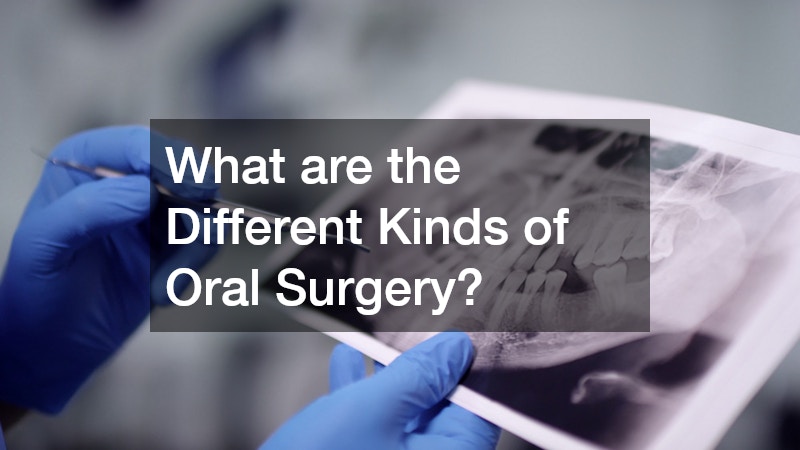

Oral surgery refers to a range of surgical procedures performed in and around the mouth and jaw. These treatments are designed to correct dental problems, restore function, relieve pain, and improve overall oral health. While many dental procedures are preventive or restorative, oral surgery focuses specifically on conditions that require surgical intervention. From simple tooth extractions to more complex jaw corrections, these procedures are typically performed by a general dentist with advanced training or an oral and maxillofacial surgeon.
Below is a closer look at the different kinds of oral surgery and what each involves.
Tooth Extractions
Simple Extractions
A simple extraction is performed when a tooth is visible above the gumline and can be removed using dental instruments without surgical exposure. This type of oral surgery is often recommended for severely decayed teeth, advanced gum disease, or teeth that are damaged beyond repair.
The procedure is typically done under local anesthesia, and recovery is relatively quick. Patients may experience mild swelling or discomfort for a few days, but complications are uncommon when proper aftercare instructions are followed.
Surgical Extractions
Surgical extractions are required when a tooth has not fully erupted or has broken off at the gumline. In these cases, a small incision is made in the gum to access and remove the tooth. This approach is more complex than a simple extraction and may require stitches afterward.
Wisdom Teeth Removal
Wisdom teeth removal is one of the most common forms of oral surgery. These third molars often become impacted, meaning they do not have enough space to fully emerge. Impacted wisdom teeth can cause pain, swelling, infection, and damage to neighboring teeth.
During the procedure, the surgeon may remove one or more wisdom teeth under local anesthesia, sedation, or general anesthesia depending on the complexity of the case. Removing wisdom teeth early can help prevent alignment issues and future dental complications.
Dental Implants
Dental implants are a long-term solution for replacing missing teeth. This type of oral surgery involves placing a titanium post into the jawbone, which acts as an artificial tooth root. Once the implant integrates with the bone, a crown is attached to restore function and appearance.
Implants are popular because they look natural and help preserve bone density in the jaw. Candidates must have adequate bone structure to support the implant, although bone grafting can sometimes be performed beforehand to strengthen the area.
Corrective Jaw Surgery
Addressing Bite Issues
Corrective jaw surgery, also known as orthognathic surgery, is performed to correct misaligned jaws. Severe bite problems can cause difficulty chewing, speaking, and even breathing. This procedure repositions the upper jaw, lower jaw, or both to improve function and facial balance.
Improving Facial Symmetry
In addition to functional benefits, corrective jaw surgery can enhance facial symmetry. Patients who have significant overbites, underbites, or open bites may notice improved appearance and confidence after treatment.
Recovery can take several weeks, and orthodontic treatment is often required before and after surgery to ensure proper alignment.
Bone Grafting Procedures
Bone grafting is often performed to rebuild or strengthen areas of the jaw that have lost bone mass. Bone loss can occur due to missing teeth, gum disease, or trauma. Without sufficient bone, procedures like dental implants may not be possible.
During bone grafting, material from the patient’s own body or a synthetic substitute is placed in the weakened area. Over time, the bone regenerates and becomes strong enough to support restorations. This type of oral surgery plays a critical role in restorative dental treatments.
Treatment for Facial Trauma
Oral and maxillofacial surgeons are trained to treat facial injuries involving the mouth, jaw, and surrounding structures. Trauma from accidents, sports injuries, or falls can result in fractured jaws, knocked-out teeth, or soft tissue damage.
Surgical intervention may be necessary to realign fractured bones, stabilize the jaw, or repair lacerations. Prompt treatment is essential to restore function and prevent long-term complications.
Oral Pathology and Biopsy Procedures
Detecting Abnormal Tissue
When abnormal growths, lesions, or persistent sores appear in the mouth, a biopsy may be recommended. This form of oral surgery involves removing a small sample of tissue for laboratory analysis.
Biopsies are used to diagnose conditions such as cysts, infections, and oral cancer. Early detection significantly improves treatment outcomes, making it important not to ignore unusual changes in the mouth.
Removing Cysts and Tumors
In some cases, cysts or benign tumors may need to be surgically removed. These growths can interfere with surrounding teeth and bone if left untreated. Surgical removal helps preserve oral health and prevent further complications.
Gum and Soft Tissue Surgery
Soft tissue procedures are another important category of oral surgery. These treatments address issues involving the gums and other soft tissues in the mouth.
Gum grafting is commonly performed to treat gum recession, which can expose tooth roots and increase sensitivity. During the procedure, healthy tissue is placed over the affected area to protect the teeth and improve appearance.
Other soft tissue surgeries may include crown lengthening, which reshapes gum tissue to expose more of a tooth’s surface, often for restorative or cosmetic purposes.
How to Know Which Procedure You May Need
The type of oral surgery recommended depends on your specific condition, symptoms, and overall oral health. A comprehensive dental examination, including X-rays or three-dimensional imaging, helps determine the most appropriate treatment plan.
Common signs that surgical care may be necessary include persistent tooth pain, swelling in the jaw, difficulty chewing, loose teeth, or unexplained growths in the mouth. Consulting with a dental professional ensures that issues are diagnosed early and managed effectively.
Oral surgery encompasses a wide range of procedures designed to restore comfort, function, and confidence. Whether addressing impacted teeth, replacing missing teeth, correcting jaw alignment, or treating disease, these surgical treatments play an essential role in maintaining long-term oral health.

Copyright © All Rights Reserved. Dentist Dentists. Sitemap